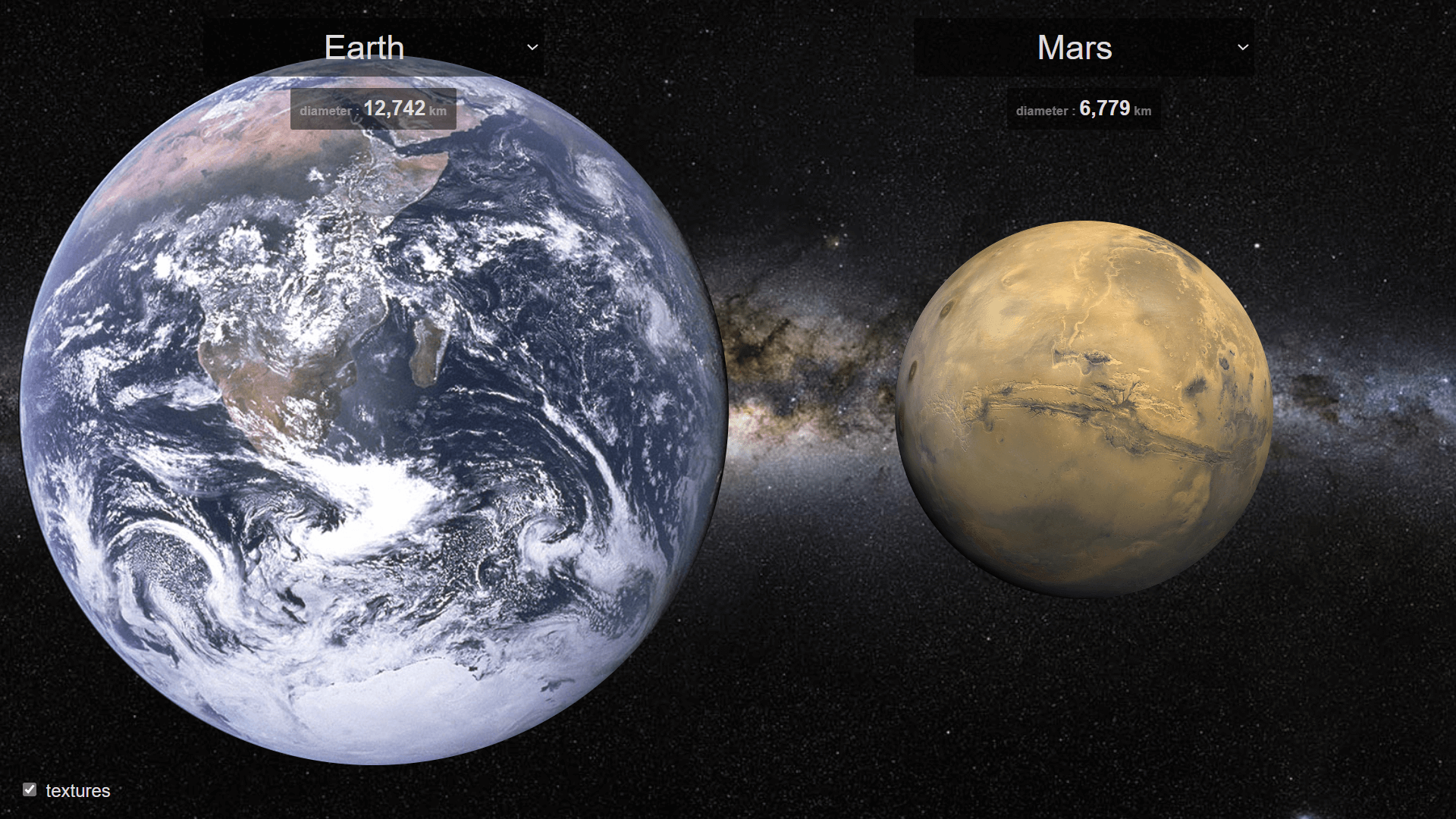
Compare Universe
Compare Universe, size comparison between diffrent planets
Go to Sim sun, moon, planets, blackhole, earth, mars, uranus, neptune, pluto, venus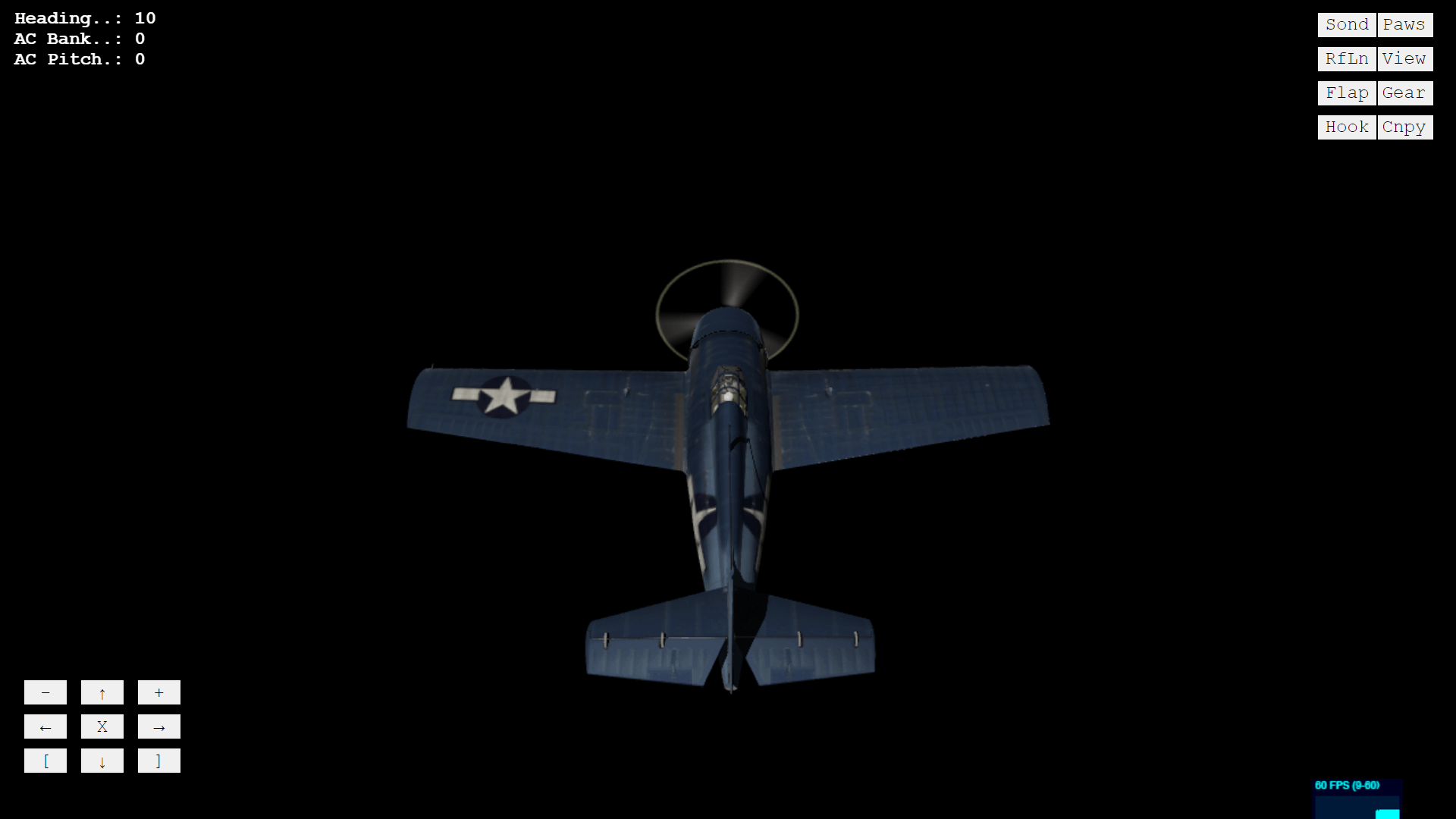
Aircraft Control simulator
How aircraft control system works, What are the diffrent control surfaces
Go to Sim Aircrafts, Control surfaces, flaps, ailerons, Rudder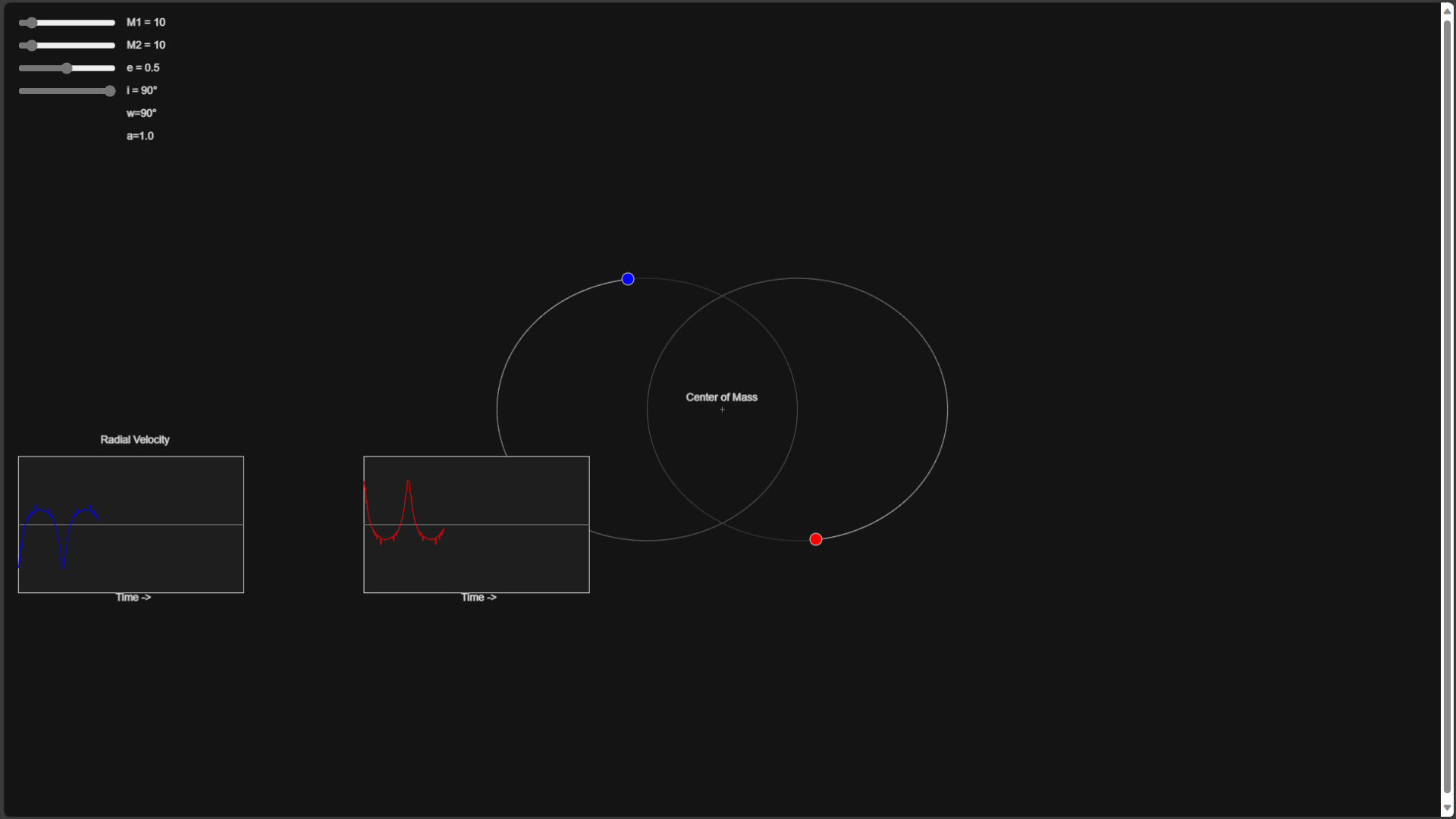
Binary Star Orbits
This simulation provides a visual representation of the dynamics of binary star systems, allowing students to observe how changing parameters affects the motion of the stars and their radial velocities
Go to Sim binary stars, orbits, Inclination, Eccentricity, Radial Velocity, Celestial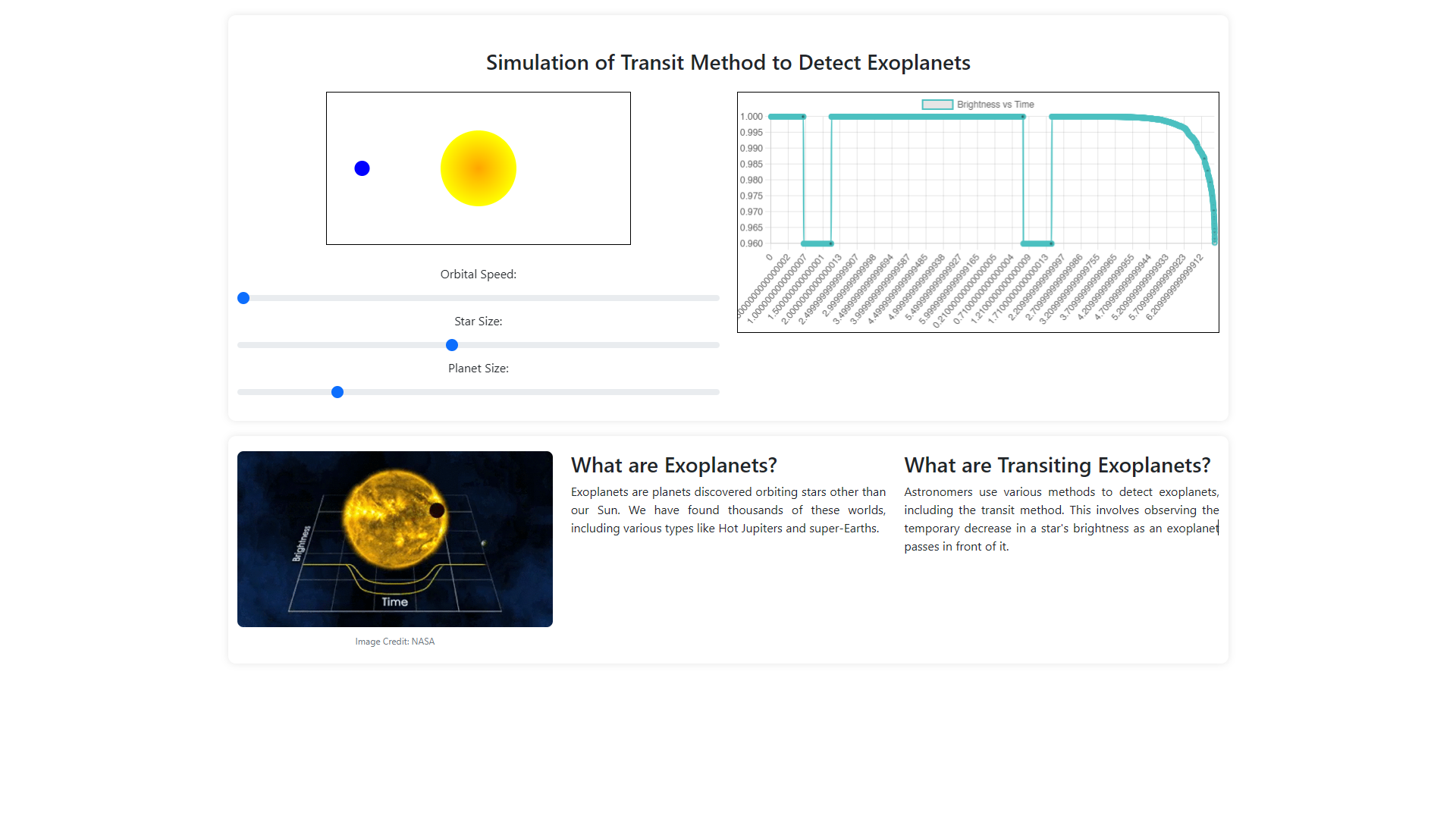
Simulation of Transit Method to Detect Exoplanets
This simulation provides a visual representation of how the exoplanets are detected and meassured.
Go to Sim Exoplanets, Transit Method, Astronomy Simulation, Exoplanet Detection, Light Curve Analysis, Astronomical Discovery, Space Exploration, Interactive Learning, Stellar Phenomena, Celestial Bodies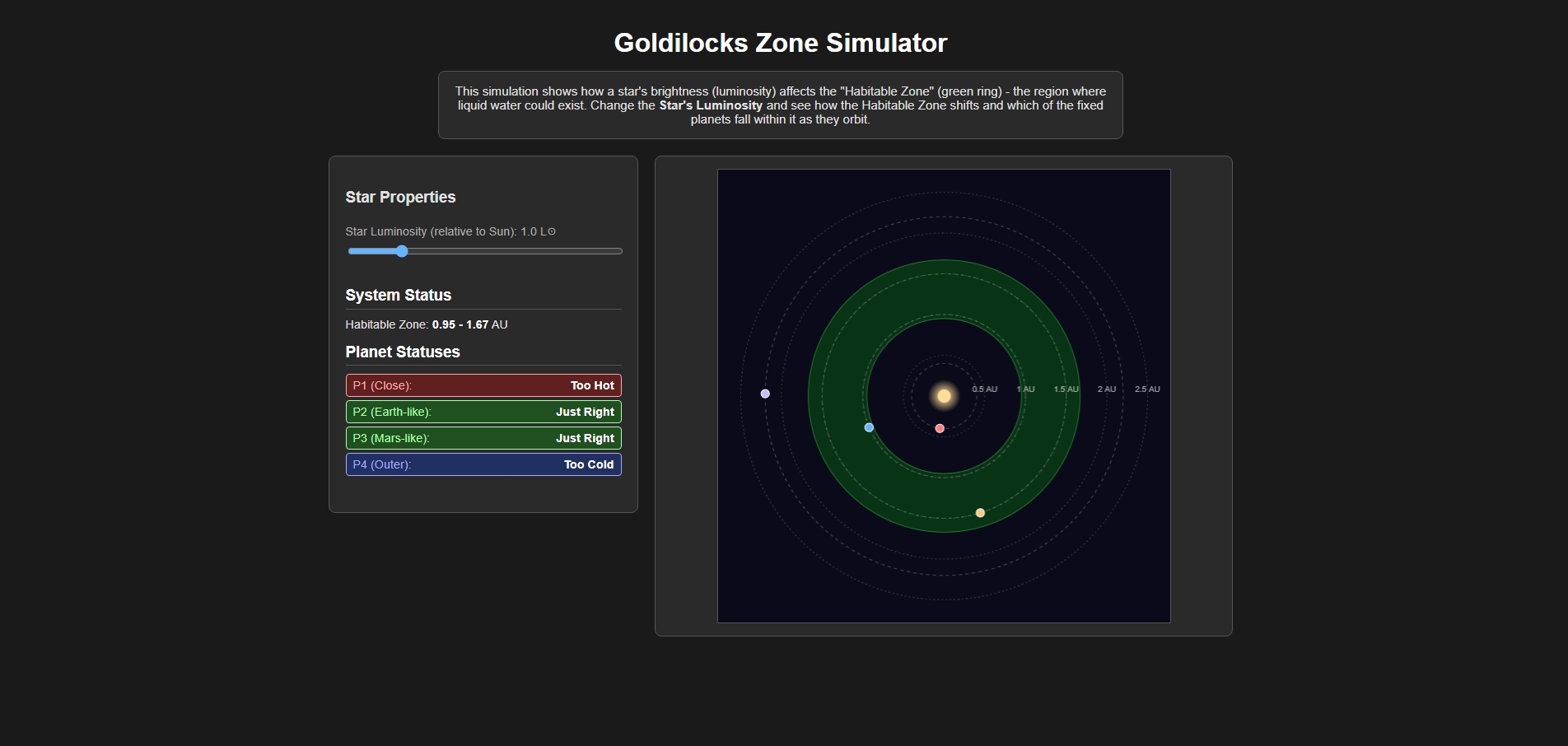
Simulation of Goldilock zone
This simulation provides a visual representation of how a size of the star is determining the habitable zone where water will remain a liquid. This distance from the Sun is called the habitable zone, or the Goldilocks zone. Rocky exoplanets found in the habitable zones of their stars, are more likely targets for detecting liquid water on their surfaces.
Go to Sim Goldilocks Zone, Habitable Zone, Exoplanets, Astronomy, Stars, Planets, Liquid Water, Luminosity, Simulation, Orbit,Exoplanets, Transit Method, Astronomy Simulation, Exoplanet Detection, Light Curve Analysis, Astronomical Discovery, Space Exploration, Interactive Learning, Stellar Phenomena, Celestial Bodies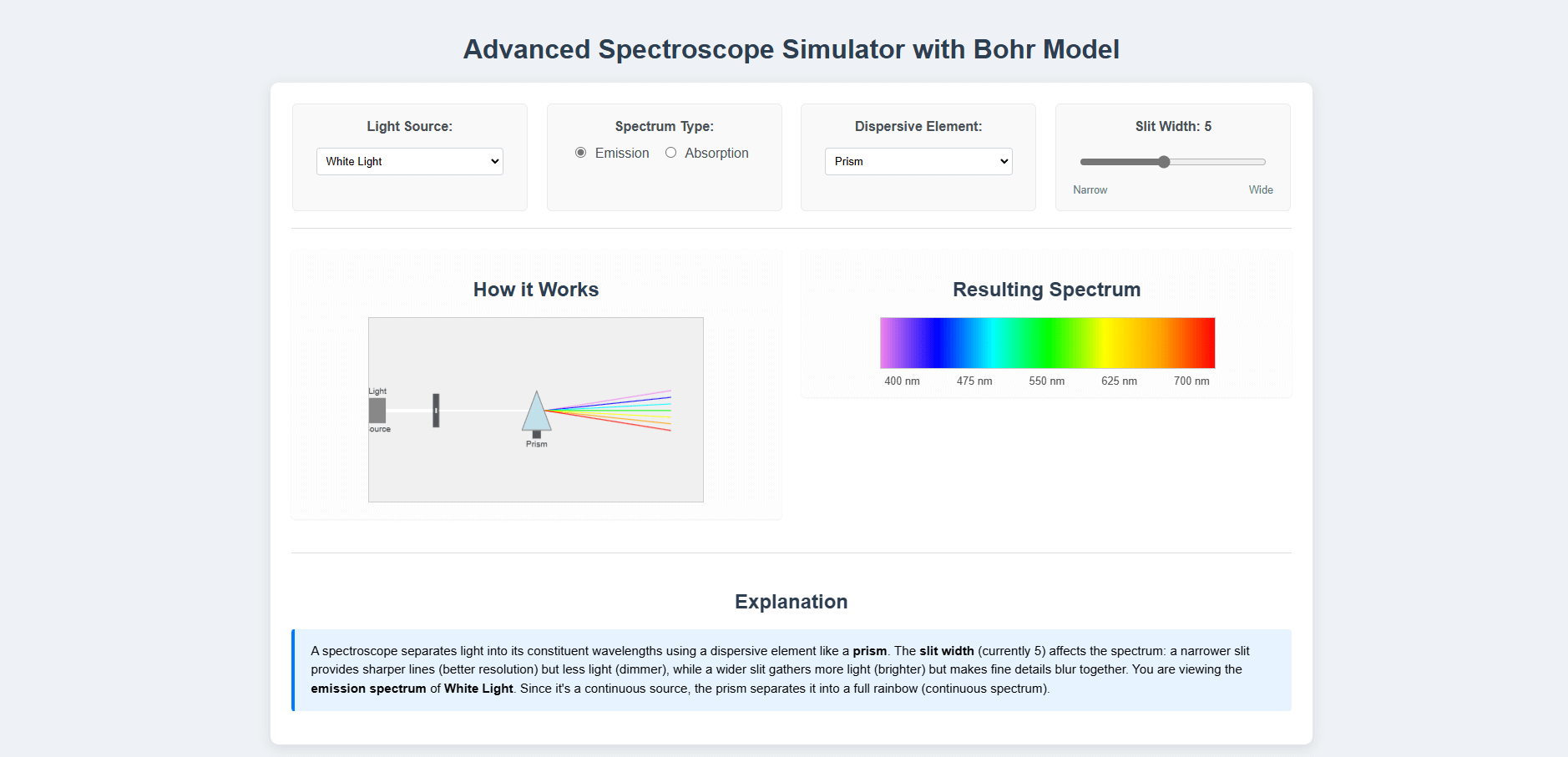
Spectroscope Simulator
Explore how light is split into spectra. Simulate continuous, emission, and absorption spectra, and visualize the Bohr model for Hydrogen.
Go to Sim Spectroscope, Spectroscopy, Spectrum, Emission Lines, Absorption Lines, Continuous Spectrum, Prism, Diffraction Grating, Light, Wavelength, Bohr Model, Hydrogen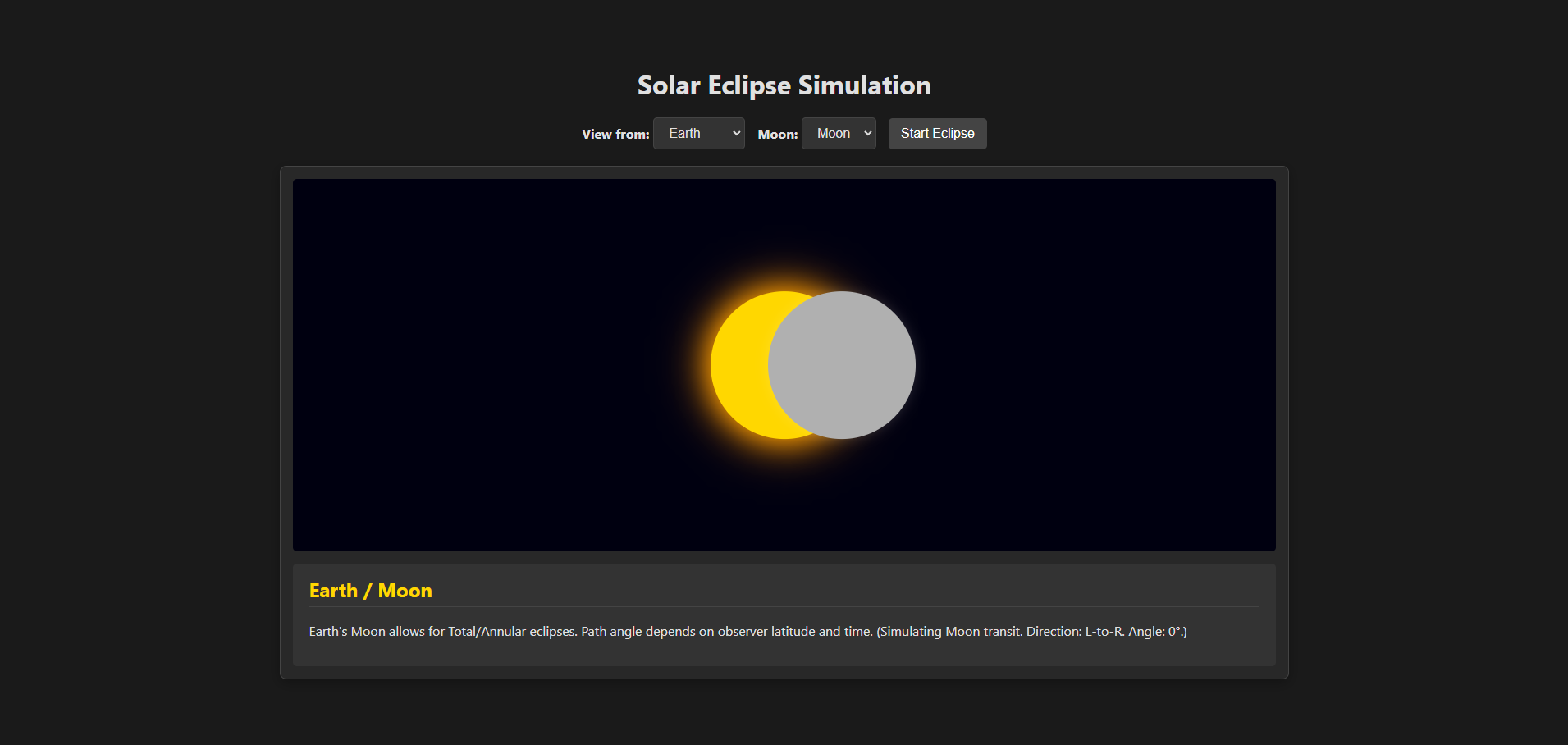
Solar Eclipse Simulation
Explore how solar eclipses and transits appear from different planets in our solar system. Select a planet and moon (if available) to visualize how varying apparent sizes, orbital directions, and path angles create unique celestial events.
Go to Sim